Intersectionality and Veganism: Why This Debate Keeps Coming Back
Every few years, a humanitarian crisis reignites the same argument inside the vegan movement: should the cause stay singularly focused on animals, or is there room to speak on human suffering too?
Two honest positions, not one villain
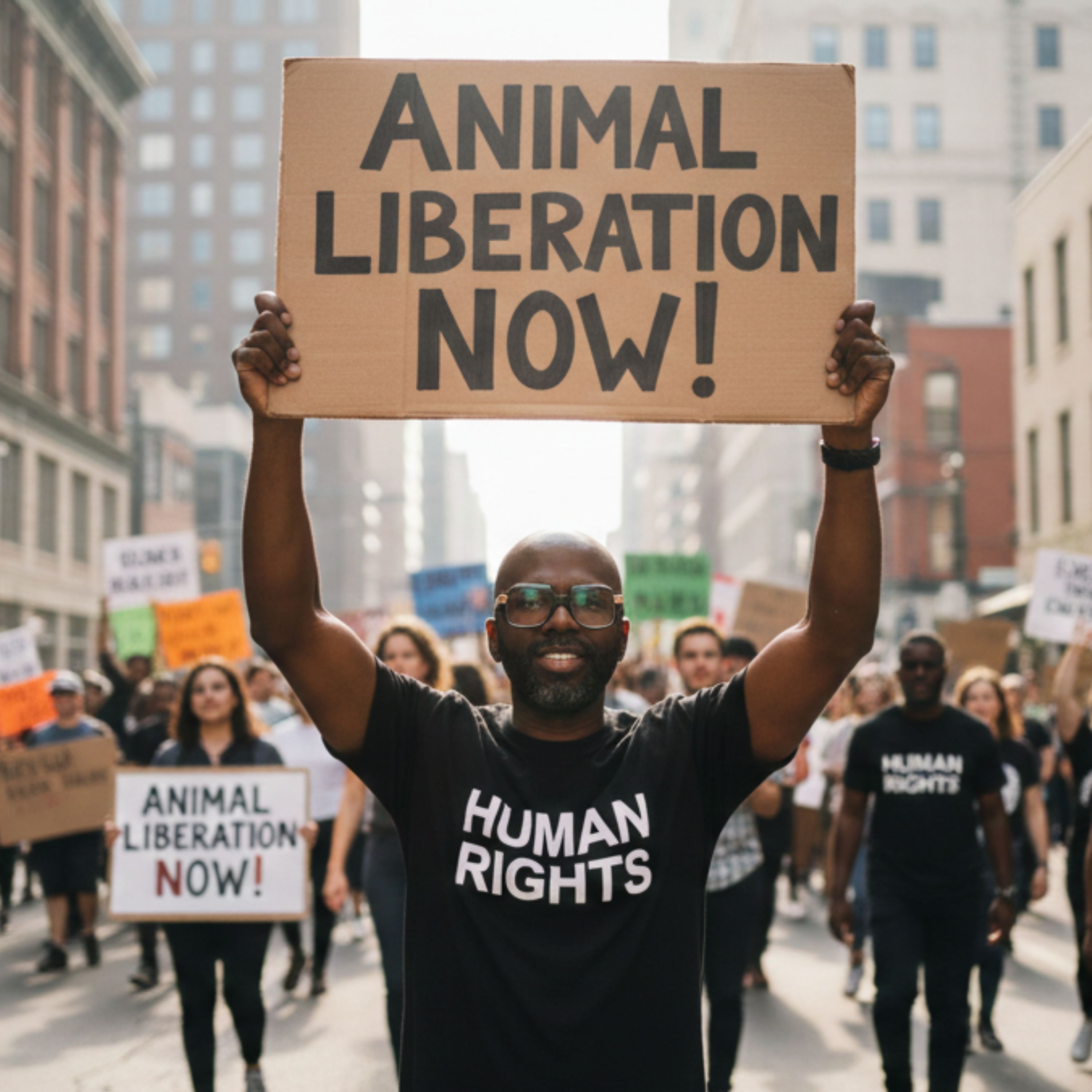
One side, represented by activists like Gary Yourofsky, argues that if the mission is animal liberation, bringing in other issues dilutes resources and focus. The other side argues that oppression is interconnected and that compassion doesn't switch on and off by species. Both positions come from real strategic and ethical reasoning, not bad faith, advocating for animals already takes enormous time, money, and emotional energy, and carrying every cause at once can genuinely weaken the work.
Where the conversation actually breaks down
The real harm shows up when people start telling others how they're allowed to care, guilting people for speaking out and guilting people for staying silent. Every advocate exists as an individual outside of any organization or platform, and speaking about human rights does not erase animal advocacy work, just as staying focused does not make someone uncaring. Shame and control have never reliably changed minds, what changes minds is showing up in a way that makes people want to listen.
- The episode frames current events as part of a recurring cycle, not new territory, citing the same tension resurfacing after George Floyd's murder in 2020.
- The stance taken: use your platform how you choose, and stop policing other people's compassion or timeline for growth.
- The closing point is explicitly non-partisan: opposing violence in the streets isn't a left or right position, it's a baseline.
On this episode

The people, places and media this story names, from our Directory. Vote for them, or open their page.
 Previous episodePlant-Based Performance: Proof from the World's Best AthletesEpisode 85 · Jan 24, 2026
 Next episodeWhy Blue Zones Became a Global Health MovementEpisode 87 · Jan 26, 2026
 Out of Sight: The Reality of Slaughterhouses with Gail EisnitzEpisode 90 · Jan 29, 2026
 What Is Creatine, Really? Breaking Down the World's Most Researched SupplementEpisode 89 · Jan 28, 2026
 Is Adding Meat a Death Spiral for Vegan Restaurants?Episode 88 · Jan 27, 2026
 Noshy, Protein-Packed Vegan Treats Built for Real LifeEpisode 84 · Jan 23, 2026
 Inside Kwaya Wines: Vegan Wine, Biodynamic Farming, and African HeritageEpisode 83 · Jan 22, 2026
 The Nutrition Blind Spot in Modern MedicineEpisode 82 · Jan 21, 2026